CCTV Drain Survey Sparkhill
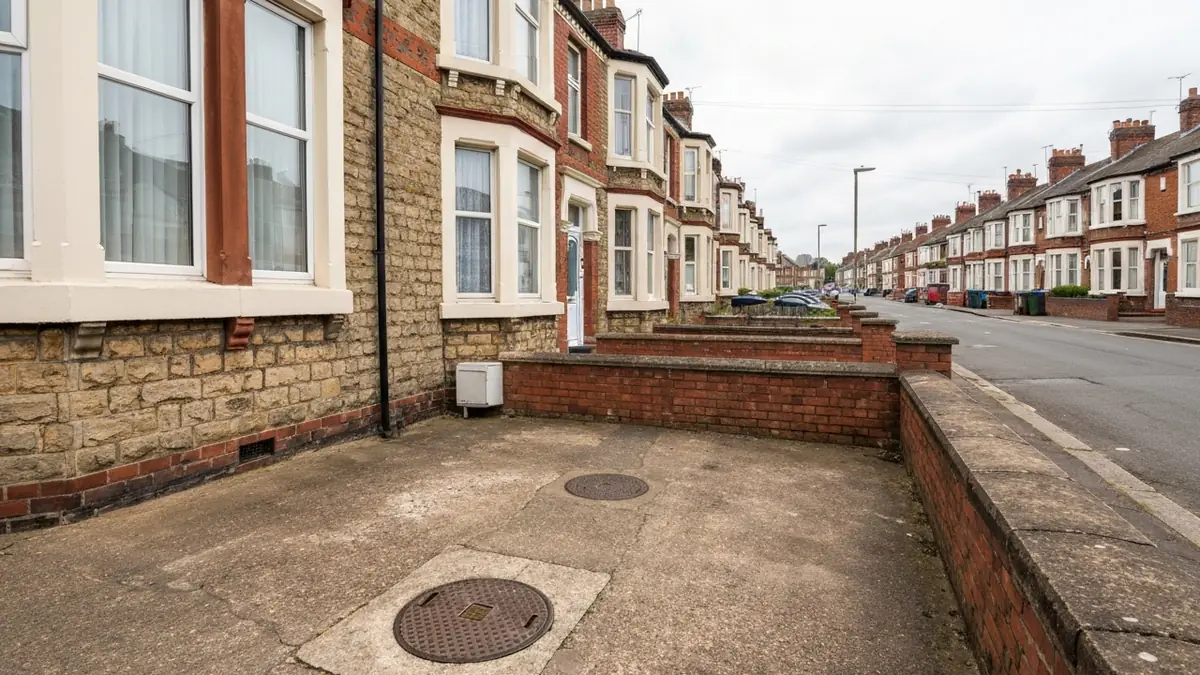
Sparkhill is a busy inner suburb of south Birmingham, built up with row after row of Victorian and Edwardian terraces. The Stratford Road runs straight through the middle. Most homes here date from between 1890 and 1920, so their drains are now well over a century old. A Birmingham CCTV drain survey can show what condition century-old drainage is in.
Victorian terrace drainage: age and root ingress
Builders fitted Sparkhill’s Victorian terraces with clay pipes as standard, joined with socket and spigot fittings. These pipes run beneath the rear yards, through brick chambers, out to the public sewer under the road or back lane.
After more than a hundred years, the mortar in these joints has crumbled in many places. Street trees along the Stratford Road and its side streets keep finding these gaps. As a result, root ingress is a known risk for recurring blockages here. This is especially true in runs that pass close to verge trees. To understand how these older homes tend to fare on survey, see our guide to what a CCTV survey finds in older Birmingham homes.
The Stratford Road: shops and homes sharing drains
The Stratford Road through Sparkhill is one of Birmingham’s busiest and most varied shopping streets. Food businesses, restaurants and takeaways line much of its length. Their drains share the same underground space as the residential laterals running off the side streets.
Because of this, grease from commercial kitchens is a known risk in drains near the Stratford Road. Where a shop’s drain run shares a chamber with nearby homes, grease build-up can cause blockages that look like a household fault. A full trace from home to sewer connection can show whether a commercial source is really to blame.
Shared drainage in dense terrace streets
Like most of Birmingham’s Victorian inner suburbs, Sparkhill’s terraces share drainage out of practical need. One run beneath a row of back yards often serves the whole terrace. A single connection then runs out to the street sewer. Severn Trent Water adopted many of these shared drains under the 2011 sewer transfer. However, the change did not cover every street.
For Sparkhill homeowners, knowing whether Severn Trent adopted your shared drain matters. It decides who is responsible for keeping it clear. A CCTV survey, together with a sewer adoption check, can be one of the most useful ways to find out. If you keep clearing the same blockage without it ever fully going away, our guide to why drains keep blocking and how a survey helps explains what to check next.
Around Sparkhill Park, several rows of terraces back directly onto each other across a shared rear passage. This layout was common practice when these streets went up. It let builders fit more homes onto a given plot. It also means a single blocked drain can affect several households on both sides of the passage at once. This is why tracing the full route matters more here than in a standalone semi.
What to expect from your survey
In Sparkhill’s Victorian terraces, the chamber usually sits at the rear, close to the boundary with the back lane. Where a rear extension has gone up over the years, it can take a little extra time to locate, since the original cover is sometimes built over.
Surveys run longer where root cutting is needed before the camera can pass cleanly through a section. A full report normally grades each finding, with its distance from the access point recorded, showing exactly where along the run a fault sits, whether that is root ingress or a shared-drain question.
Around Formans Road and Tyseley Lane, several older terraces still share a single drain exit. A survey can trace the full shared route, rather than stopping at your own boundary. This can help establish which section is yours, which is shared, and which Severn Trent has adopted.
Booking a Sparkhill drain survey
We cover the whole of B11 across Sparkhill and the surrounding streets. Book through the quote form for a CCTV drain survey, a homebuyer survey or an inspection.
Typical Drain Issues in Sparkhill
- Root ingress from street trees into clay pipe
- Victorian clay pipe network deterioration
- Shared drainage in dense terrace housing
- FOG accumulation from commercial food businesses
Property Types Covered in Sparkhill
- Victorian terraces
- Edwardian terraces and semis
- Inter-war housing
- Commercial properties